AI-nsanity
Have you fully embraced AI yet? Is it an integral part of your personal and professional life? If not, you're the problem, right?
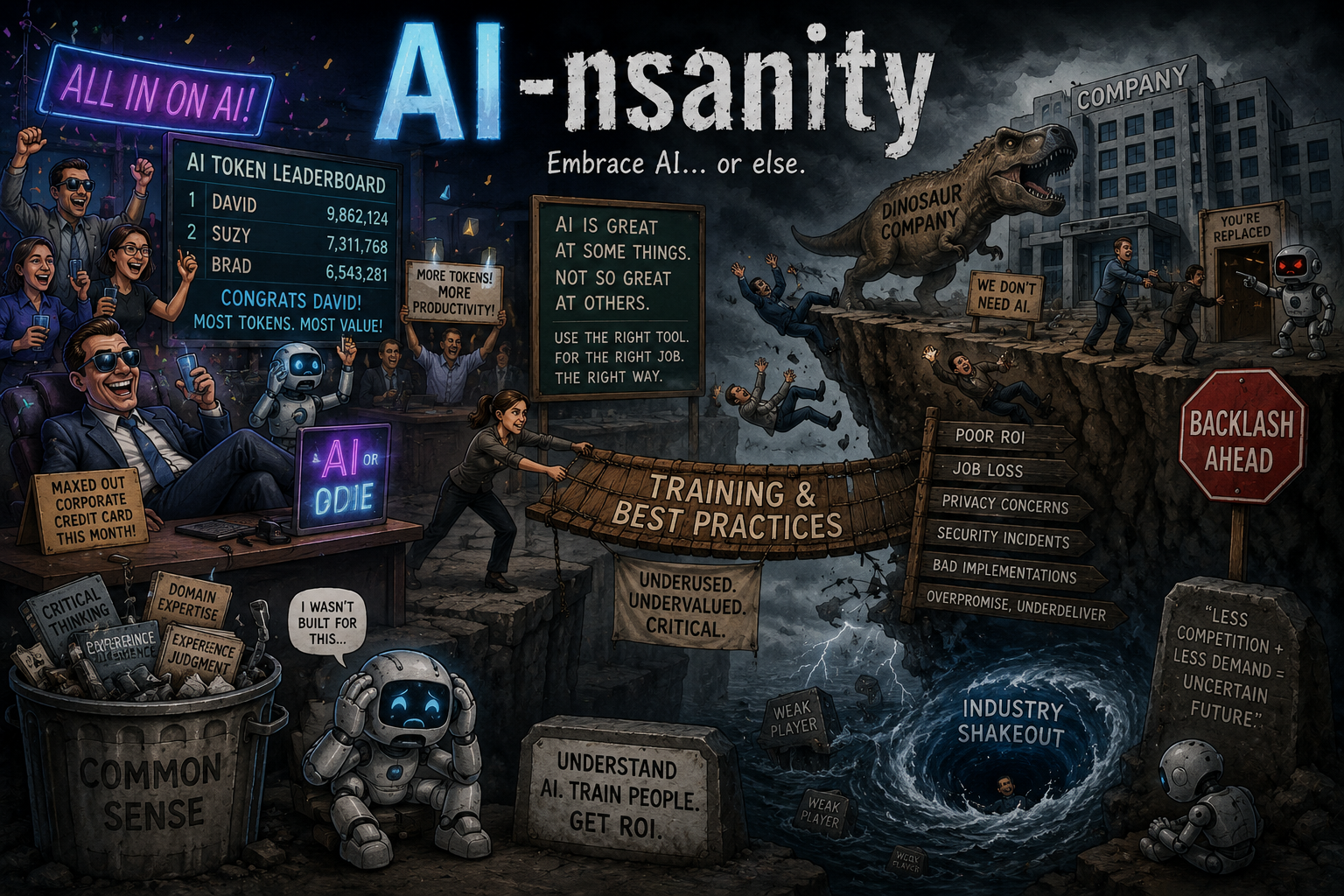
Have you fully embraced AI yet? Is it an integral part of your personal and professional life? If not, you're the problem, right? That seems to be the prevailing attitude - AI or die - and that's a problem for me. Let's talk about it.
I talk to a lot of different companies and see a lot of talk from others - plus I see what is happening in my own job from the use and securing of AI, and one thing has become crystal-clear to me over the last several months: If your company isn't whole-hog into AI by now, then it's obviously a dinosaur and if the employees aren't using AI to the max, well, then they need replacing. I kid, of course, but that is the all-to-familiar attitude I am seeing in too wide a swath of corporate America - and it's probably the same elsewhere too. It's gotten so crazy that companies had literal leaderboards for who consumed the most AI tokens - which is another way of saying, "who spent the most money?". In any other context, that would be a red flag - NOT a measure of productivity. "Congrats to David, who maxxed out his corporate credit card this month!" - insanity.
So if you are someone in the food chain at your organization who is responsible for implementing AI or mandating its use, then this next bit is for you:
AI is great at some things and not so great at others. It is both seemingly magic and requires real understanding of how it works to use it effectively. It hardly need be said - but I'm going to say it anyway - that many use cases of AI today are ill-suited and most employees do not know how to use AI effectively. It's like asking someone who has never used an iPhone to use it to manage a corporate database. With the right training and an intimate understanding of the phone and database management, you could get the job done - but absent either, you're in for a very rough time. Why would you expect that to be a productive business model?
The real problem is a lack of corporate training (classes) on AI usage and best practices. My job offered some that was... interesting... But not what I would teach or how. I am becoming more and more convinced that this might be something I need to develop and offer. Hopefully others who have dedicated time to building a knowledgebase and expertise around AI are doing the same - because from what I can tell, there is going to be a huge backlash against AI from several directions - from employers who stop buying services that see little ROI, to employees who lose their jobs for whatever AI-related reason, to privacy concerns, to legitimate security incidents when either an agentic system is connected to something it shouldn't and malfunctions or when a bad AI implementation is exploited and compelled to do something it shouldn't. Then we will likely see a large industry shakeout, and the weaker AI players will not survive it. We all know what happens when we reduce competition - but then we also know what happens when we reduce demand. Where will that leave the AI industry?
Now you know why I haven't invested in Anthropic or OpenAI despite using both.
Joe Tomasone studies all manner of technology-related subjects and teaches on them occasionally. This article was not written by AI - but it was a perfect use case for it.